The Traders Who Shaped How I Trade and Teach
Nobody figures this game out alone. Here's who I learned the most from, what I took from each of them, and where I do things differently.
Quick thing before we start. I've never met any of these people. No affiliation, no partnership, nothing like that. These are just the traders and authors whose work actually changed how I trade, and whose ideas you'll recognize inside my mentorship whether I say their names or not. I figured I'd say the names.
I've read a lot of trading content over five years. Most of it is noise. These three stuck. And with each of them there's stuff I took and stuff I left behind, because copying anyone one-to-one is how you end up trading someone else's personality. That never works. It's the whole reason my program is built around developing YOUR style, not cloning mine.
Mark Douglas: One Trade Means Nothing
 The one everyone recommends. For once, everyone is right.
Everyone tells you to read Trading in the Zone. Fine, it's earned it. But most people read it, nod along, and change absolutely nothing. I know because I did exactly that the first time.
The idea that finally landed for me is thinking in probabilities. Any single trade is a coin flip with an edge. You can do everything right and lose. You can do everything wrong and win. So judging yourself on one trade is pointless. The only thing that matters is whether you executed your process over a series of trades.
That one idea is baked into almost everything I have my students do. It's why the Student Portal journal tracks your emotions next to your P&L, because the trade that hurts is rarely the trade that was wrong. It's why our reviews look at twenty trades at a time, not one. And it's why I don't let students size up after a good week. A good week is just variance until the process says otherwise.
Where I push back on Douglas: reading about psychology doesn't fix your psychology. Nobody journals their way out of revenge trading alone at their desk. You need reps, and you need someone watching who calls it out the same day it happens, not in some monthly review when the damage is done. That's the whole reason my mentorship is daily. Douglas gives you the framework. The daily accountability is what makes it stick.
Tom Hougaard: Learn to Lose Properly
 The most honest trading book on my shelf.
Best Loser Wins is the most honest trading book I've read. Hougaard's core point is that the difference between winners and losers isn't the winning. Everyone wins sometimes. The difference is what you do when you're losing. Amateurs add to losers, freeze, or revenge trade. Professionals lose small, lose without drama, and move on.
That reframed how I review trades with students. We spend more time on the losses than the wins. Not to beat anyone up, but because how you lost tells me everything about where you actually are. A small, clean loss on a valid setup gets a thumbs up from me. A winner where you moved your stop gets a hard conversation. Most mentors do it the other way around, and it teaches people to hide their losses. Hiding losses is how accounts die.
Where I differ from Hougaard: his style is aggressive, high stakes, and honestly built on a pain tolerance most people don't have and shouldn't pretend to have. He'd probably agree. I start every student on micros for exactly that reason. You learn to lose properly when losing costs you lunch money, not rent. The skill transfers. The blown account doesn't.
FuturesTrader71: Know Your Own Numbers
Morad Askar, better known as FuturesTrader71 or just FT71, doesn't get mentioned enough anymore, which is a shame because his old webinars taught a whole generation of futures traders how to think about volume profile. Mine included. If you've read my volume profile guide or my order flow guide, you're seeing ideas that trace back through him.
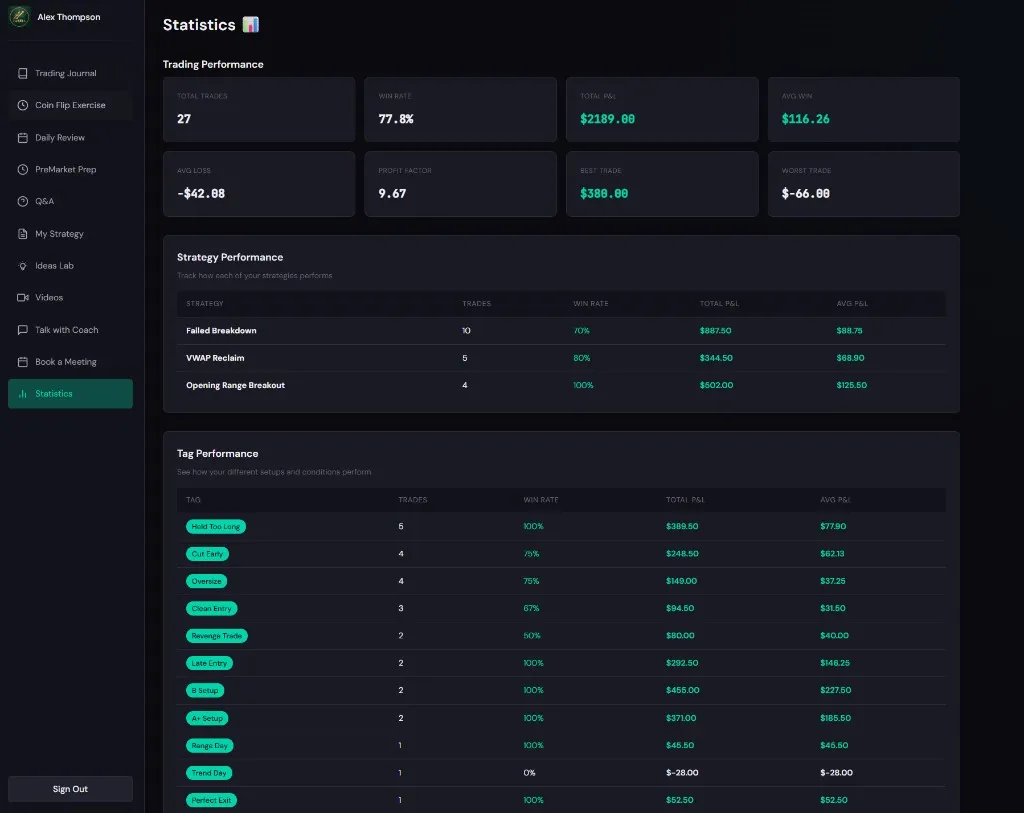
But the volume profile stuff isn't even the biggest thing I took from FT71. The biggest thing is this: treat trading like a performance sport and collect stats on yourself. Most traders can tell you everything about the market and nothing about their own trading. What's your win rate in the first hour versus the afternoon? Which setup actually pays for your month? You should know these numbers cold. Almost nobody does.
He's also the reason I take sim trading seriously. There's this macho idea that sim doesn't count. FT71 treated sim as a professional tool, and so do I. Sim done right, with real rules and real review, is where habits get built. It's why my students prove their process on sim before going live, and it's why the reviews on this site keep mentioning that the sim results actually transferred to live accounts. That transfer doesn't happen by accident.
The portal's performance analytics exist because of this mindset. Pre-market prep, journal, daily review, stats. It's basically the workflow FT71 preached, built into one place so my students don't have to duct-tape it together from spreadsheets like I did.
How It All Fits Together
If I had to boil it down: Douglas taught me how to think about outcomes, Hougaard taught me how to handle losing, and FT71 taught me how to work. Probabilities, losses, process. That's honestly most of trading right there.
The piece none of them could give me is the piece I ended up building my whole mentorship around. Feedback while it's happening. A book can't watch you trade. A webinar recording can't tell you that you're revenge trading right now, today, before the account takes the hit. That gap between knowing the right ideas and actually doing them under pressure is where most traders get stuck for years. It's exactly the gap daily 1-on-1 coaching exists to close.
If you want to go straight to the source material, all three show up in my trading books list with notes on when to read what. Start there. And when you're ready for someone to actually watch you apply it, book an intro and we'll talk.
Want this applied to your trading, every day?
See 1-on-1 MentorshipMore from the Academy: Trading Psychology Books • Best Trading Books • About Joakim • Order Flow Guide • Volume Profile & VWAP • Risk Management • All Free Resources