Best Trading Books
Not 50 books you'll never read. 12 that actually matter.
Updated · by Joakim Jusell, full-time futures trader
Quick Picks
Short on time? These are the four I'd hand you first.
- Best overallTrading in the Zone
- Best for complete beginnersHow to Day Trade for a Living
- Best for building a processOne Good Trade
- Best for honest motivationBest Loser Wins
I've read 50+ trading books. Most were forgettable. These 12 changed how I trade. They're organized by what stage you're at, because the right book at the wrong time is useless.
How to Actually Use These
One book at a time. Finish before starting another.
Take notes. The book doesn't matter. Your notes do.
Apply immediately. Read → Try → Review → Repeat.
Re-read psychology books. Every 6 months. You'll see new things.
Foundation (Start Here)
Read these before risking real money. They build the right mental framework.

Trading in the Zone
The definitive book on trading psychology. Douglas explains why most traders fail and how to think in probabilities.
Key Takeaways
- Every trade is just one of the next 1,000. The outcome doesn't define you.
- Your edge only works over a series. Individual trades are random.
- The market isn't threatening you. Your interpretation of it is.

The Disciplined Trader
Douglas's first book. More about the mental traps traders fall into and how to build discipline.
Key Takeaways
- Trading forces you to confront every psychological weakness.
- Discipline isn't about willpower. It's about belief systems.
- You can't control the market. You can only control yourself.
Best Loser Wins
Raw, honest look at what it takes to win in trading. Hougaard shares his journey and the mindset shifts that made him profitable.
Key Takeaways
- The best traders are the best losers. They cut losses fast and move on.
- Confidence comes from knowing you can handle any outcome.
- Your comfort zone is where your trading edge goes to die.
Process & Method
Once you have the mindset, these teach you how to actually trade.
One Good Trade
Inside look at a prop trading firm. Shows how professional traders develop through review and deliberate practice.
Key Takeaways
- Review every single trade. Good traders are obsessive reviewers.
- Build a playbook of YOUR best setups. Trade those, ignore the rest.
- One good trade at a time. That's all you need.
The Playbook
Sequel to One Good Trade. Goes deeper into developing trading playbooks and systems.
Key Takeaways
- Document your setups with specific triggers, stops, and targets.
- Know which setups to size up on and which to pass.
- Your playbook evolves as you evolve as a trader.

How to Day Trade for a Living
Practical introduction to day trading mechanics. Good overview of strategies and daily routines.
Key Takeaways
- Simple strategies work. You don't need 20 indicators.
- Risk management is more important than entry signals.
- Treat it like a business, not a hobby.
Market Wisdom
Timeless lessons from trading legends. Read these when you want perspective.

Reminiscences of a Stock Operator
Fictionalized biography of Jesse Livermore, one of the greatest traders in history. Written in 1923, still relevant today.
Key Takeaways
- "It was never my thinking that made money. It was my sitting."
- Markets change, human nature doesn't.
- Patience and capital preservation beat everything else long-term.

Market Wizards
Interviews with the best traders of the 80s. Shows there's no single path to success.
Key Takeaways
- Every successful trader does it differently. Find YOUR way.
- All agree on one thing: risk management is non-negotiable.
- The best traders are always learning, always adapting.

New Market Wizards
More trader interviews. Different styles, same core principles.
Key Takeaways
- Cut losses short, let winners run. Everyone agrees.
- Consistency matters more than big wins.
- The market will teach you who you really are.
Advanced Reading
For when you've got the basics down and want to go deeper.

Thinking, Fast and Slow
Not a trading book, but it explains the cognitive biases that destroy traders. Nobel Prize-winning research.
Key Takeaways
- Your brain is wired to make bad trading decisions.
- Loss aversion is real. Losses hurt 2x more than wins feel good.
- Overconfidence is the most dangerous bias.

Fooled by Randomness
Understanding the role of luck vs. skill in trading. Humbling and important.
Key Takeaways
- You're probably more lucky than skilled. Stay humble.
- Survivorship bias makes trading look easier than it is.
- Black swans happen. Always be prepared.

The Daily Trading Coach
101 lessons for self-coaching. Practical exercises for improving your trading psychology.
Key Takeaways
- You can be your own trading coach with the right structure.
- Small daily improvements compound into massive change.
- Process > Outcome. Always.
Not Trading Books, But They Made Me Better
None of these are about trading. Every one of them changed how I trade anyway, because most of this game is how you handle yourself, not what the chart is doing.
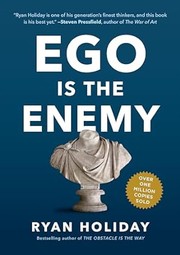
Ego Is the Enemy
A book about getting out of your own way. Holiday's point is that ego wrecks most people right when they start to win, which is exactly what happens to traders after a good run.
Key Takeaways
- The market humbles the ego eventually. Cheaper to drop it yourself first.
- Being right feels good. Making money is the job. They aren't the same thing.
- The days after a green streak are when you're most dangerous. Stay small.

Poor Charlie's Almanack
Charlie Munger's collected talks and mental models. It has nothing to do with trading, but it rewired how I think about probability, incentives, and avoiding stupidity, which is most of this game.
Key Takeaways
- Invert. Instead of chasing the perfect trade, spend your energy not blowing up.
- Most of your edge comes from skipping dumb mistakes, not finding genius setups.
- Borrow from many fields. Markets are psychology, math, and history at once.

Principles: Life and Work
Dalio built the biggest hedge fund in the world by writing down his rules and actually following them. The whole book is basically the argument for having a trading plan, applied to your entire life.
Key Takeaways
- Write your rules down so you're not deciding from emotion in the moment.
- Treat every loss as data. It stings, but that's how you find your holes.
- Being brutally honest with yourself is the only thing that makes you better.

The Complete Conversations with God
The odd one out on this list. It's a spiritual book, not a trading one. But it's what helped me stop tying my worth to a P&L and detach from the outcome, and that quietly fixed a lot of my trading.
Key Takeaways
- Fear and scarcity make you trade badly. This book works on both of them.
- You are not your results. A red day isn't a verdict on you as a person.
- Letting go of the outcome is what finally lets you trust the process.
What to Avoid
Skip books that promise:
- Secret systems that guarantee profits
- Get rich quick with "this one indicator"
- Trade for 30 minutes a day and make $1,000
- Any specific dollar amount claims
If it sounds too good to be true, it is. Real trading books talk about process, psychology, and the difficulty of the game, not easy money.
Read the books and want help applying them to your own trades? That's what my trading mentorship is for.
Book Your Intro Session ($20)Related: Best Trading Psychology Books • My Trading Influences • Free Trading Journal • Day Trading Guide • Risk Management • Futures Markets • Trading Days • Pre-Market Checklist • Weekly Review Template • Trader Personality Test • YM Trade Review • Volume Guide • Compounding Returns • Orderflow Entries