Is Day Trading Worth It? An Honest Answer From a Full-Time Trader
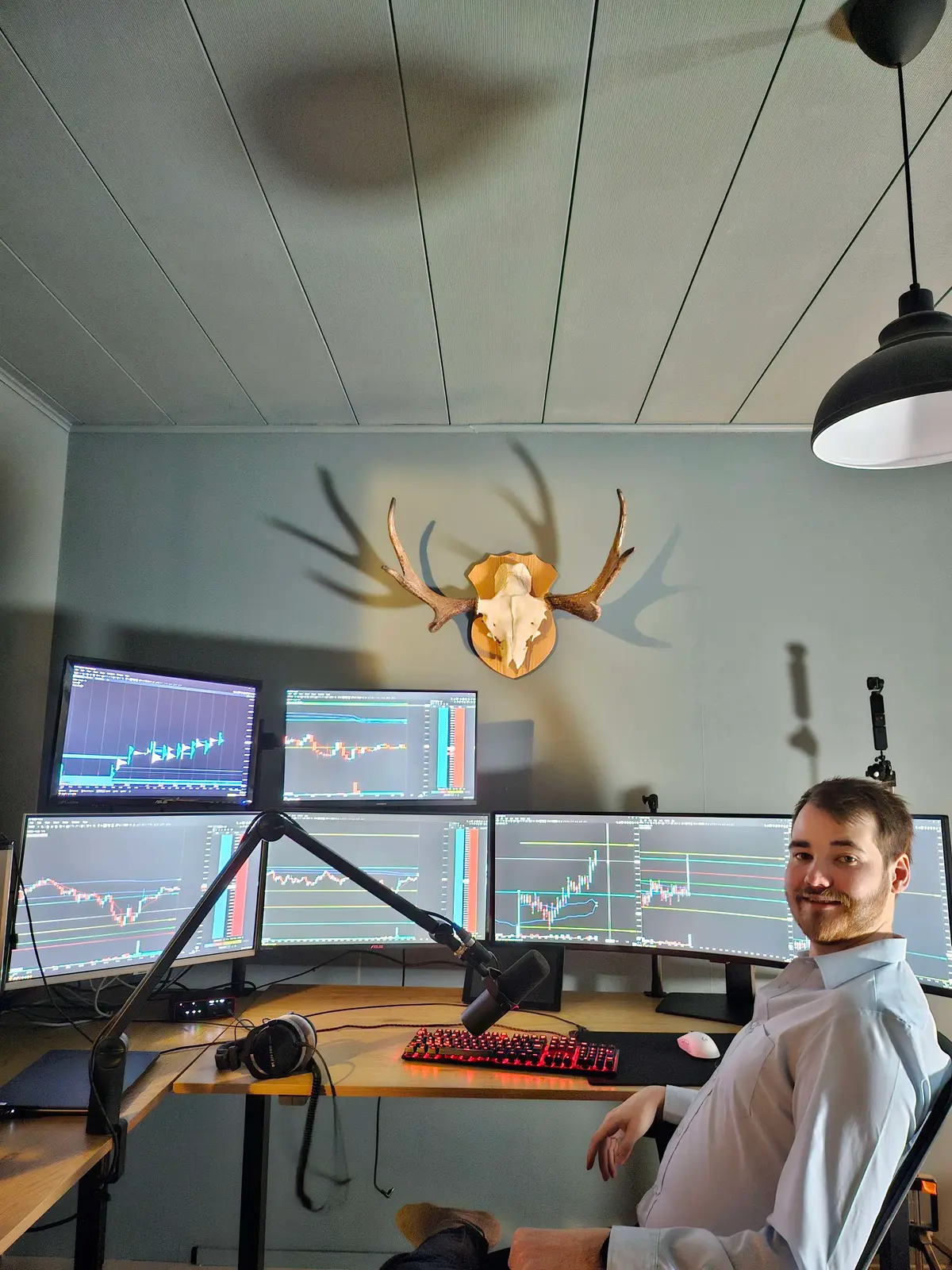
I trade futures for a living, and I still wouldn't tell most people to day trade. Here's what the research actually says, what it really costs, who it's worth it for, and how to find out without risking much.
Published · by Joakim Jusell
The short answer
- For most people, no. Research on real day traders shows the large majority lose money, and very few earn a living.
- For a small group, yes. People who treat it as a skill that takes years, start in sim, risk money they can afford to lose and keep strict rules.
- The costs most people forget are time and the money you lose while learning, not the platform fees.
- You don't have to guess which group you're in. You can find out cheaply in a few months, and I'll show you how.
People expect a trader to say yes. I'm not going to, at least not without a long list of conditions.
I blew my first account within a few weeks. No stop loss, no plan, and I didn't even know what a CPI release was. After that I spent roughly two years grinding before things clicked and I went full time. So for me, it ended up being worth it. But I've also watched a lot of people spend money and years on trading and walk away with nothing, and I'd rather you decide with the real numbers in front of you.
What the Research Says About Day Traders
Two of the most cited studies on real day traders, using actual account data rather than surveys, say roughly the same thing:
That's the honest starting point. Most people who try day trading lose money, and the ones who stay the longest don't magically turn it around. Persistence alone isn't enough.
But notice what those numbers describe: everyone who traded, including people with no plan, no risk rules and no training. The question for you isn't "do most day traders lose?" They do. The question is whether you're willing to do the things the small profitable group does differently.
Why Most People Lose
- No edge. They trade setups they saw in a video, with no evidence the setup works over hundreds of trades.
- No risk rules. One bad day wipes out a month. Leverage makes this happen fast, especially in futures.
- Emotions. Revenge trading after a loss, moving stops, adding to losers. I wrote a whole guide on revenge trading because it ends so many accounts.
- Learning from marketers. A lot of trading education is made by people who earn their money selling courses, not trading.
- Going live too early. Real money before a tested process means paying the market for lessons you could have learned in sim.
- Costs. Commissions, data and slippage add up when you trade often, and they turn a break-even trader into a losing one.
What Day Trading Really Costs
People budget for the platform. They rarely budget for the rest:
| Cost | What it looks like |
|---|---|
| Tools | A platform and market data. My own order flow setup is under $100 a month. Simulation can be close to free. |
| Learning losses | The money you lose while you're still learning. This is the big one, and it's why you start in sim and then with micro futures. |
| Time | Usually years, not months. I break down why in how long it takes to become profitable. |
| Education | Anything from free books to paid mentorship. Expensive doesn't mean good, and free doesn't mean useless. |
| Stress | Losing streaks hurt, even when you followed every rule. If money pressure is high, it shows up in your trading. |
Who Day Trading Is Worth It For (and Who It Isn't)
Probably worth it if
- You can afford to lose your learning money entirely
- You'll trade in sim before risking real money
- You're willing to journal and review every trade
- You're thinking in years, not weeks
- You want the skill, not quick money
Probably not worth it if
- You need income from it soon
- You'd be trading rent or savings money
- You mostly want excitement
- Losing streaks would wreck your mood or your life
- You're hoping someone hands you signals
If the second list sounds more like you, that's not a judgment. It just means the timing is wrong. Come back to it when it isn't.
How to Find Out If It's Worth It for You (Cheaply)
You don't have to bet your savings to learn whether you have what it takes. This is roughly the path I'd give anyone starting today:
- Learn the basics first. How futures work, what moves the market, and risk management before strategy. My step-by-step start guide covers the order.
- Pick one market and one setup. For most people that's ES or MES. Fewer moving parts means you can actually measure something.
- Trade it in sim for at least 100 trades. TradingView paper trading is a cheap way to start. Treat sim money like real money, or the results mean nothing.
- Journal every trade. Win rate, average win and loss, and whether you followed your rules. My trading journal is free.
- Decide with data. After 100 trades, look at the numbers. Are you following your rules? Is the setup positive after costs? That tells you far more than how you feel about trading.
- Only then go small and live. One micro contract, with a daily loss limit you never break.
If after a few months you're still repeating the same mistakes and can't see why, that's the point where outside feedback, from a mentor or an experienced trader who reviews your trades, is usually worth more than another book. I wrote an honest breakdown of whether a trading mentor is worth it if you're at that stage.
My Honest Take
Day trading is one of the hardest ways to make money there is, and it's sold as one of the easiest. That gap is where most people get hurt.
It was worth it for me, but it took a blown account, two years of daily work and a lot of honesty with myself about my mistakes. If you're willing to do that, start small and measure everything, it can be worth it for you too. If you're not, keeping your money is a perfectly good decision.
Questions People Ask
Is day trading worth it?
For most people, no, at least not the way it's usually sold. It can be for a small group who treat it as a skill that takes years, start in sim, risk only money they can afford to lose and keep strict risk rules.
What percentage of day traders make money?
Very few. In a study of Brazilian futures day traders, 97% of those who kept going for more than 300 days lost money. A large study in Taiwan found less than 1% were predictably profitable after fees.
Is day trading worth it for beginners?
Worth learning about, but don't risk real money until you've traded in sim with a written plan and tracked at least 100 trades. My beginner guide walks through the first six months.
Can you make a living day trading?
Some people do, but it's a small minority and it usually takes years. You need an edge, enough capital that normal returns cover your costs, and the discipline to survive losing streaks. I run the numbers in how much day traders make.
Is day trading just gambling?
It is when you trade without a plan, an edge or risk limits. Done properly it's closer to running a small business: a defined process, fixed risk per trade and decisions based on your own data.
How much money do you need to start day trading?
Very little to learn in sim. For live trading, micro futures let you start small, but only use money you can afford to lose entirely while you learn.
Decided it's worth it? Learn it with someone watching your trades from day one.
See 1-on-1 MentorshipKeep reading: How Much Do Day Traders Make? • How Long to Become Profitable • How to Start Day Trading • What Is Day Trading? • Risk Management • Is a Trading Mentor Worth It? • All Free Resources