How to Find a Day Trading Mentor Who Actually Trades
To find a good day trading mentor, look for someone who trades live every day and will prove it on a screen share, who reviews your own trades instead of selling you a system, and who keeps their student list small. Then be honest about your side, because no mentor fixes a problem you aren't willing to work on. Below is where to look, how to check all of it, and the exact questions I'd ask before paying anyone, me included.
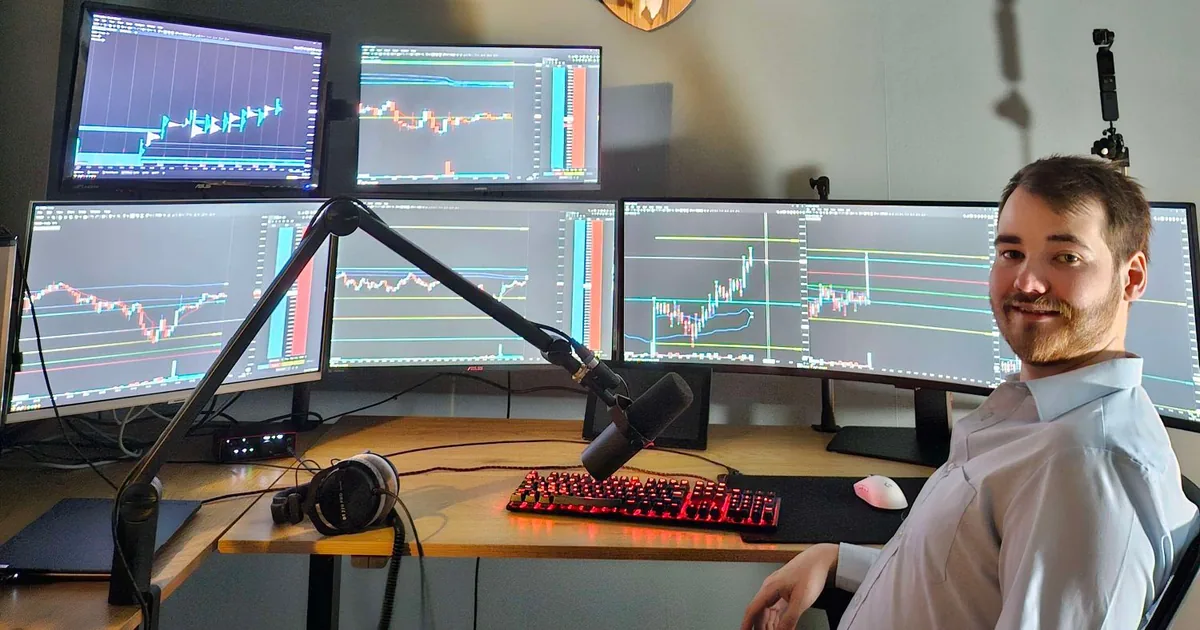
I'm a full-time futures trader and I mentor five traders at a time, so I'm not a neutral party on this. I'd still rather you end up with the right mentor than the wrong one, even if that isn't me, because a bad one costs you twice, once for the mentorship and again in the habits you have to unlearn afterwards.
Everything below is a check you can run on anyone, me included. At the end I answer every question on the list myself.
On this page
A Mentor Won't Do the Work for You
I'll start with the part that's easy to leave out when you sell mentorship. Paying someone doesn't fix your trading. Plenty of traders pay for help and change nothing, because they keep skipping the journal, keep trading outside the plan and wait for the mentor to hand them the answer.
What a good mentor does is shorten the loop. They spot the mistake you've repeated for months in a week, tell you exactly what to change, and keep checking until it's fixed. The changing is still on you. You have to show up every session, write the plan, journal every trade, sit through the boring days and stick to the rules when you don't feel like it. That takes months, with any mentor.
If you're not sure whether you need a mentor yet, I wrote about where that line is in is a trading mentor worth it. For a realistic idea of how long this takes, see how long it takes to become a profitable trader.
Where to Find a Day Trading Mentor
Each of these is good for something different.
| Where | Good for | Watch out for |
|---|---|---|
| Mentorship programs run by full-time traders | Daily attention on your own trades and a structure to follow | Costs more. Check the student cap and what a normal day includes |
| YouTube and Instagram traders | A free look at how someone thinks before you pay them | Being good on camera and being good in the market are different skills |
| Referrals from traders you know | The strongest signal there is, from someone who has been through it | Rare, and what worked for them may not suit you |
| Reddit (r/Daytrading, r/FuturesTrading) | Honest opinions when you already have a name to check | Anyone can post, and it's a poor place to find someone new |
| Discord groups and paid communities | Company during the session, chat, shared ideas | Signals and group calls, rarely anyone looking at your trades |
| Freelance marketplaces | Cheap one-off calls | Almost no way to verify the person, and no follow-through |
If you're searching for a trading mentor near you, location matters much less than you'd think. Futures trade on a screen, so everything a mentor does with you happens over screen share, chat and calls. What matters is that they're at their desk during the session you trade. For US index futures that means from 9:30 AM ET, so check that their day actually overlaps with yours.
How to Check That a Mentor Actually Trades
This is the part almost every guide skips, and it matters more than anything else on this page. Plenty of good teachers don't trade anymore, which is fine for a course. A mentor who isn't in the market, though, can only tell you what used to work.
Ask what they traded today
Someone who traded this morning can tell you the market, where they got in and what they got wrong, without having to think about it. If the answer is vague, or turns into a story about a big win from two years ago, that tells you a lot.
Ask for a screen share, not screenshots
A screenshot of a green day proves very little. It can come from a sim account or from the one good week of the year, or be cropped to hide everything around it. Ask them to share their screen and scroll through months of history. You want to see dates, losing days, and position sizes that make sense for the account.
Know what prop firm payouts prove and what they don't
Payout certificates from firms like Apex or Topstep are real proof that someone passed the rules and got paid, and they're much harder to fake than a P&L screenshot. They're still prop accounts, so ask whether the mentor also trades their own money and what the prop account is for. And if a mentor makes most of their money from affiliate codes for evaluations, they have a reason to keep you buying them.
Talk to someone they've coached
Reviews on a third-party site with real names and countries are a good start. A conversation with a former student is better. A good mentor can usually set that up, even if it takes a few days to match schedules.
What Real Mentorship Looks Like Day to Day
Once you know they trade, the next question is what you actually get. The word mentorship gets put on everything from a Discord channel to a folder of videos, so it helps to know what the real thing looks like.
- Before the open you send a plan and they check it. Your levels, the setups you're allowed to take and your max loss for the day.
- After the close they go through your trades, with specific notes on what to change tomorrow.
- Once a week you get time with them live to look at the bigger picture and decide what to work on next.
- During the day you can message them and get a fast answer whenever they aren't in a trade themselves.
- Over time you build a written plan that fits you and risk rules you actually follow.
If a program can't tell you which of those you'll get, it's probably a course with a mentorship label on it. A course can still be worth buying, but it should cost a lot less than 1-on-1 mentorship.
Questions to Ask Before You Pay Anyone
Use the first call to interview them as much as they're interviewing you. These are the questions I'd ask, with what a good answer sounds like and what should make you slow down.
| Ask | A good answer | Slow down if |
|---|---|---|
| What did you trade today? | A market, a trade, and what went wrong as well as right | It's vague, or they mostly teach now |
| Can you show me your history on a screen share? | Yes, months of it, losing days included | Only screenshots, or only the best days |
| How many students do you have right now? | A specific number small enough for daily attention | Hundreds, or they won't say |
| What happens on a normal day in the mentorship? | Plan review, trade review, and how fast they reply | You get the Discord and the videos |
| What do we work on first? | Risk, routine and journaling | A new entry signal or indicator |
| Will I be trading your system? | They build a structure around how you trade | You copy their setup exactly |
| What do you expect from me? | Clear expectations about effort, journaling and showing up | Nothing, because the system does the work |
| What does it cost, and what if it's not for me? | A clear price and refund terms in writing | Discounts that expire tonight, pressure to decide now |
| Can I talk to a former student? | Yes, even if it takes a few days to arrange | No |
Red Flags
Most of these show up within the first few minutes if you know to look for them.
- Promised returns or income, in any form. Nobody honest can promise that, because results depend on what you do.
- Only green days on display. Every trader has losing weeks, and how they handle them is the part worth learning.
- Signals sold as mentorship. Following someone's calls doesn't teach you to find and manage your own trades.
- A business built on prop firm affiliate codes, where every problem gets solved with another evaluation.
- Pressure to decide on the spot, countdown timers, and prices that go up tonight.
I go deeper into what separates a good mentor from a bad one in is a trading mentor worth it.
What a Day Trading Mentor Costs
Real 1-on-1 mentorship usually runs $1,000 to $10,000 or more. Group coaching is $1,000 to $5,000, recorded courses $300 to $2,000, and paid communities $30 to $150 a month. The price mostly tracks how much of the mentor's time you get, so a very cheap 1-on-1 offer usually means very little of it.
Whatever you pay, it only works if you put in the hours alongside it. I break the tiers down, with my own prices and the reasoning behind them, in how much a trading mentor costs.
How I Answer These Myself
Since I've asked you to put every mentor through this, here are my own answers.
| Question | My answer |
|---|---|
| What did you trade today? | ES, YM and RTY with order flow, and NQ with a system of my own. Ask me on the call and I'll tell you how it went, good or bad. |
| Proof | On the intro call I share my screen and walk you through my prop account history and payouts. My latest payouts are on my about page. |
| Students | Five at a time, never more. |
| A normal day | You send your plan before the open, I go through your trades after the close, and we have a live call once a week. I reply fast when I'm not in a trade. |
| What we work on first | Risk and routine. I put you on a structure that works and check every day that you're following it. |
| My system? | I don't hand out my system. I build each trader around how they see the market. |
| What I expect from you | That you show up every session, send your plan, journal every trade and actually change what we agree to change. If you won't, I'm the wrong person to pay. |
| Price and refund | A $20 intro call first. One month is $1,600 and three months is $3,200, with a 14-day money back guarantee. |
| Former students | Yes. I'll ask who's willing and set up a call. It takes a few days to match schedules. |
If that sounds like what you're looking for, book a $20 intro call and ask me everything on this page. You can read how the program works on my mentorship page.
Trading Mentor FAQ
How do I find a day trading mentor?
Start with traders whose thinking you already follow, then check three things before paying: that they trade live now and will show you their history on a screen share, that they review your own trades every day, and that they keep their student count small. Use the first call to ask what they traded today and what a normal day in the mentorship looks like.
Where can I find a trading mentor online?
Mentorship programs run by full-time traders, traders you follow on YouTube or Instagram, and referrals from other traders are the best places to start. Reddit is useful for checking a name you already have. Discord communities and freelance marketplaces rarely give you anyone who looks at your own trades.
Is there a trading mentor near me?
You don't need one nearby. Futures trade on a screen, so mentoring happens over screen share, chat and calls. What matters is that the mentor is at their desk during the session you trade, which for US index futures means from 9:30 AM ET.
How do I know if a trading mentor is legit?
Ask them to share their screen and show months of trading history, losing days included, and ask what they traded today. Look for reviews on a third-party site with real names and ask to speak with a former student. Promised returns, only showing wins and pressure to pay on the spot are the warning signs.
Will a trading mentor make me profitable?
No mentor can promise that, and you should be wary of anyone who does. A good mentor shortens the time it takes to find and fix your mistakes, but you still have to show up every session, follow the plan, journal your trades and put in months of screen time. Paying for help doesn't replace that work.
What should I ask a trading mentor before paying?
Ask what they traded today, whether they'll show their history on a screen share, how many students they have, what a normal day in the mentorship looks like, what you work on first, the price and refund terms, and whether you can talk to a former student.
How much does a day trading mentor cost?
Real 1-on-1 mentorship usually costs $1,000 to $10,000 or more. Group coaching runs $1,000 to $5,000, recorded courses $300 to $2,000 and paid communities $30 to $150 a month. The price mostly reflects how much of the mentor's time you get.
Is 1-on-1 mentorship better than group coaching?
For most traders stuck on consistency, yes, because the problem usually sits in their own execution and only someone looking at their trades can see it. Group coaching is cheaper and fine for learning concepts, but nobody checks what you actually did.
Want to run these questions on me? Book a $20 intro call, ask me anything on this page, and I'll share my screen.
Book Intro Call ($20)Keep reading: 1-on-1 Trading Mentorship • Is a Trading Mentor Worth It? • How Much Does a Trading Mentor Cost? • How Long to Become Profitable • Risk Management • Free Trading Journal • About Joakim • All Free Resources